- Telegram:@dzsms777
- WhatsApp:+1(873)7774378
Industry News
China Economic Review Sept. 11--China Economic Net
Opinion
Injecting capital into central financial enterprises to shore up foundations and deliver long-term benefits
The Ministry of Finance has announced plans to issue 300 billion yuan in special treasury bonds to bolster the core Tier-1 capital of eight centrally administered financial institutions, among them ICBC and Agricultural Bank of China. With additional subscriptions from other shareholders, the total capital injection will reach 360 billion yuan.
Finance, the lifeblood of the national economy, is a vital part of a country's core competitiveness. Using special treasury bonds to boost the capital of central financial enterprises is both a proactive, forward-looking arrangement and a long-term move to shore up foundations. It matters greatly for building a financial powerhouse and keeping the macroeconomy on an even keel.
Finance's core mission is to serve the real economy. Since bank lending is subject to capital adequacy requirements, only by bolstering core Tier-1 capital can banks expand credit within regulatory limits, effectively support the real economy, and benefit numerous businesses and individuals. Similarly, only by strengthening their capital base can insurers improve solvency and expand underwriting capacity, thereby achieving a virtuous cycle between finance and the real economy.
Compared with the previous round, this injection extends beyond two major state-owned commercial banks to include two policy-based financial institutions and four state-owned commercial insurers. By expanding its coverage, the move will enable financial institutions to provide better, high-quality services that align with economic and social development.
The capital injection also serves to boost risk resilience and make the financial system more robust. With global economic uncertainties on the rise, China's financial sector continues to face complex and severe challenges. Capital is the cornerstone of risk resistance for financial institutions, and a multi-tiered capital replenishment system plays a crucial role in preventing systemic financial risks. By helping central financial enterprises replenish core Tier-1capital, the move will shore up their capital buffers, strengthen their risk resistance, and lay a firmer foundation for long-term development. This, in turn, will enhance the resilience of the financial system and safeguard China's financial stability and security.
Policy
1. China's Ministry of Industry and Information Technology has issued a development plan for the information and communications industry during the 15th Five-Year Plan period (2026-2030) to promote the high-quality development of this sector. According to the plan, a new-generation communications network with comprehensive coverage and leading performance is expected to be fully established by 2030, laying a solid foundation for basically achieving modernization of the information and communications sector by 2035.
2. A national guideline on boosting the high-quality development of China's time-honored industries such as silk, tea and porcelain was jointly issued by the Ministry of Industry and Information Technology and five other government departments on September 7, targeting 50 leading enterprises with annual revenues exceeding 10 billion yuan each by 2028. The guideline also aims to shape 100 national consumer brands and build several industrial clusters with an annual output of over 100 billion yuan by 2028.
Data
1. The national planted area of cultivated forage grass reached 116 million mu (over 7.73 million hectares) in 2025, and the regionalized clustering of forage production initially took shape. To increase forage output, the National Forage Industry Technology System released and promoted more than 100 new technologies, new products, and new models on September 6.
2. According to the China National Intellectual Property Administration (CNIPA), the number of valid invention patents held on the Chinese mainland had reached 5.667 million as of the end of July 2026.
3. China's foreign exchange reserves totaled 3.4383 trillion U.S. dollars at the end of August 2026, up by 19.5 billion U.S. dollars, or 0.57 percent, compared to the end of July, official data from the State Administration of Foreign Exchange showed.
4. According to China Railway Kunming Group Co., in the first eight months of this year, the China-Laos Railway operated a total of 972 international passenger trains and carried 244,000 cross-border passengers, an increase of more than 50 percent compared with the same period in 2025.
5. China's foreign trade maintained swift growth in the first eight months of 2026, with both exports and imports posting solid gains. The country's total goods imports and exports rose 17.6 percent year on year to 34.78 trillion yuan (about 5.13 trillion U.S. dollars) in the January-August period, according to the General Administration of Customs.
6. China's Cross-Border Interbank Payment System signed agreements with 11 foreign banks as direct participants on September 8, covering countries such as Rwanda, Türkiye, and Uzbekistan for the first time, marking a further improvement in the global service capacity of the RMB cross-border payment system.
7. China's Shenzhen-Hong Kong-Guangzhou cluster remained the world's leading innovation cluster for the second consecutive year, according to a report released by the World Intellectual Property Organization (WIPO) on September 8 in Geneva.
8. The Ministry of Human Resources and Social Security and other government departments on September 9 officially recognized 11 new occupations and 23 new specialties under existing occupations, reflecting evolving labor demand driven by technological advances, industrial upgrading and changing consumer needs. Authorities also revised information concerning six existing occupations or specialties, including agricultural product brokers.
9. The 2026 China International Fair for Trade in Services (CIFTIS) opened on September 9 in Beijing, as China steps up efforts to expand opening-up in services trade at the outset of the 15th Five-Year Plan period (2026-2030). Running through Sept. 13 at Shougang Park, the fair has drawn participants from 90 countries, regions and international organizations, with over 1,800 companies exhibiting on-site. A number of new technologies, new services, and new solutions will make their debuts.
10. The Ministry of Commerce has recently added 84 national key foreign investment projects, with a total investment of 19.46 billion U.S. dollars. The newly added projects are mainly concentrated in manufacturing, involving fields such as electromechanical equipment, chemical energy, automobiles, and healthcare.
(Source: Economic Daily)
-
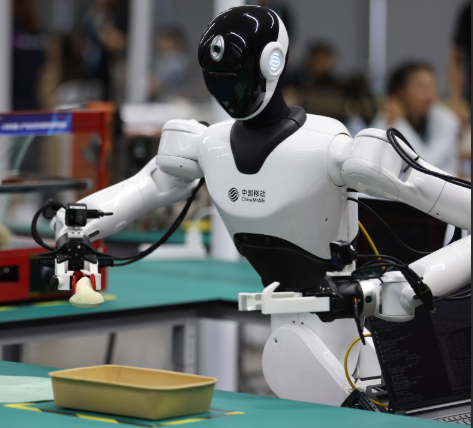 'Factory Flower' is a robot 2026-10-26
 -
 How to win in "AI+"? The synergy of "green el 2026-10-26
 - Youthful Chapter Pursuing Dreams in Northern Xinjiang | Sing 2026-10-26
- Damai Performance hosts Xiao Zhan's tour in Nanjing, with st 2026-10-26
- China marks anniversary of Taiwan's recovery with events ac 2026-10-26