- Telegram:@dzsms777
- WhatsApp:+1(873)7774378
Latest Updates
Why can't I stop watching short videos
It's late at night, and I've been working all day lying in bed. I know I should put down my phone and rest, but I can't stop and keep scrolling through short videos one by one. Are you familiar with such a scene? The phenomenon of constantly scrolling through mobile phones can be understood from various perspectives, and economics can also provide you with some interesting explanations.
Utility is one of the most commonly used concepts in economics, which is an abstract measure of the degree of satisfaction and happiness we obtain from consumption. The consumption here can be purchasing goods or services. Buying a cup of milk tea or watching a movie can generate utility. The more we prefer a certain consumption, the higher the utility it brings.
The essence of consumption is the decision-making process of pursuing maximum utility within limited resources. However, utility does not equal usefulness or utility. Sleeping is more beneficial to the body than using mobile phones, but the instant pleasure brought by using mobile phones often makes us reluctant to sleep. This phenomenon is known as the "paradox of value" in economics - what is useful to you may not necessarily make you make choices; What makes you make choices is often what makes you more satisfied in the present moment.
This is because what truly influences our decision-making is not the total amount of utility, but the marginal utility - the additional utility obtained by consuming 1 unit more. The marginal utility brought by sleeping for an extra minute cannot compare to the pleasure brought by watching one more video, so time goes by like this over and over again.
The algorithms of short video platforms are also trying their best to fully utilize the characteristics of marginal utility. On the one hand, we never know what the next video will be, it could be a cute pet or a hot news topic. This uncertain positive feedback stimulates the brain to secrete dopamine, keeping us looking forward. More importantly, this randomness constantly "resets" the marginal utility expectation of the next video: perhaps the next one looks better?
On the other hand, the algorithms of short video platforms capture our favorite video content and continuously push it. The problem also arises, and the first few funny videos and hot topics that I come across can indeed bring high marginal utility. But as time goes by, the algorithm constantly pushes homogeneous content, and the "incremental happiness" brought by each additional swipe will become less and less. One hour, two hours... After a long time, we may even feel bored, tired, and anxious, even if our fingers are still mechanically sliding the screen. At this point, the total utility of using mobile phones may still be increasing, but the marginal utility is close to zero or even negative, which explains why many people often feel regretful after staying up late to watch videos.
In addition, the time preference in the intertemporal utility function also affects our behavior of using mobile phones. We can simply divide utility into two periods: present and future, and time preference is the trade-off between people's "present consumption" and "future consumption". Everyone has different time preferences: some prefer to leave satisfaction for the future, while others prefer immediate enjoyment. Brushing short videos is a typical instant behavior. Many people tend to value small gains in the present and underestimate future utility.
Watching mobile videos can bring happiness with a small opportunity cost, and it's not impossible to relax appropriately. But without restraint, it is often because we fall into the carefully designed "trap" of instant feedback systems. By understanding the logic behind this, the next time you watch short videos on your phone late at night, you may be able to have a clearer awareness. Economics ultimately teaches us not only to explain the world, but also to help us make choices that make us truly happy in our limited lives. (Source: Economic Daily Author: Guo Na)
(
-
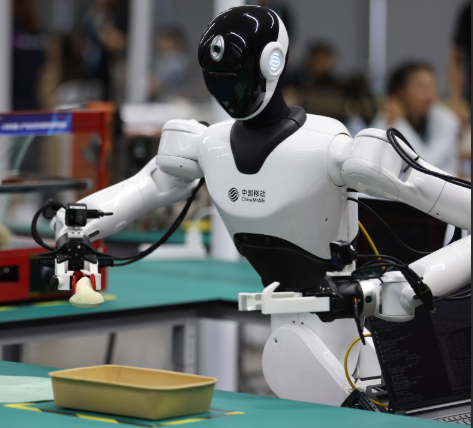 'Factory Flower' is a robot 2026-10-26
 -
 How to win in "AI+"? The synergy of "green el 2026-10-26
 - Youthful Chapter Pursuing Dreams in Northern Xinjiang | Sing 2026-10-26
- Damai Performance hosts Xiao Zhan's tour in Nanjing, with st 2026-10-26
- China marks anniversary of Taiwan's recovery with events ac 2026-10-26
Related Product
Related News

Sms Broadcaster Machine Telegram:@dzsms777