- Telegram:@dzsms777
- WhatsApp:+1(305)6290111
Company News
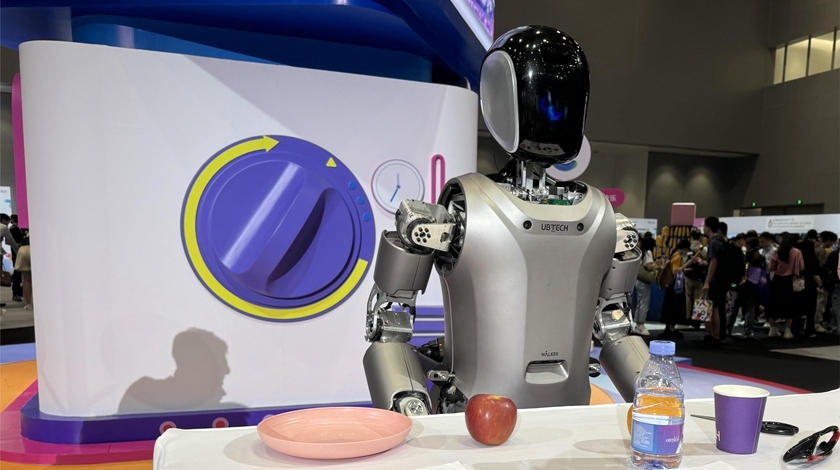
Embodied intelligence urgently needs to overcome the 'homewo
The 2026 World Artificial Intelligence Conference was recently held, with nearly half of the more than 1100 participating companies in the fields of intelligent computing and embodied intelligence. From Yangge Dance on the Spring Festival Gala stage to endurance running on the marathon track, the popularity of embodied intelligence continues to rise. It is worth pondering how to move from a performance that can run and jump to a practical assignment that is both visually appealing and enjoyable.
As a key carrier for the interaction between artificial intelligence and the physical world, embodied intelligence is standing at a critical juncture from technological verification to large-scale commercialization. The "Report on the Development of China's embodied intelligence industry (2026)" shows that by 2026, the size of China's embodied intelligence market is expected to reach 1.09 trillion yuan, with an average annual compound growth rate of 22% to 23%, making it one of the fastest-growing embodied intelligence markets in the world. From the perspective of standards, China has developed nearly 200 key standards in the field of artificial intelligence; From the perspective of open source, Chinese enterprises actively embrace the open source paradigm, with large model downloads ranking first in the world, and some open source communities gathering over 11 million registered users.
A series of data outline the gratifying achievements of the development of the intelligent industry, but we also need to be aware of the shortcomings behind it.
From performance to homework, it tests the maturity of the entire industry chain. The demonstration and verification demonstrate the technical limits, with a focus on being able to achieve them. Normalized operations require stability, durability, and continuity, with the key being the ability to consistently achieve and excel. At present, due to the significant differences between the controllable environment in the laboratory and the complex industrial scenarios, it is difficult to implement, apply, and popularize technological achievements. In addition, the lack of model generalization ability, scarcity of high-quality physical world data, and insufficient maturity of some hardware engineering are still key constraints on the development of the industry.
Not long ago, the Ministry of Industry and Information Technology and the State owned Assets Supervision and Administration Commission of the State Council jointly issued a notice to officially launch the 2026 Special Action for Realistic Training of Humanoid Robots and Embodied Intelligence. Realistic training is an important means to promote the "operation mode" of humanoid robots and embodied intelligence. The launch of this special action is timely. Through repeated polishing and debugging in real scenes, problems can be quickly corrected, continuous iterative optimization can be carried out, and the shortcomings of real machine data and scene adaptation can be filled in, building an industrial closed loop of "training iteration application re optimization". This is not only an accelerator for technology implementation, but also can further reduce the cost of trial and error for enterprises.
Realistic training is a key starting point for the specific commercialization of intelligent technology, and to accelerate its progress beyond the "homework barrier", continuous efforts are needed in multiple aspects.
Intensify the research and development of core technologies, and shift the innovation platform from technology display to scenario polishing. Taking the "Tiangong Open Source Plan" released by the National and Local Joint Construction Intelligent Robot Innovation Center as an example, it opens its ontology platform to the world, accelerates the collaborative research and development of core components such as joint modules, and some products have reached the international leading level. But being able to use does not mean being easy to use, and the consistency and reliability of core components still need to be continuously verified in real working conditions. We need to build an open real-world verification field based on existing innovation platforms, bringing typical scenarios such as industrial manufacturing and warehousing logistics into the testing field, allowing robots to accumulate data and iterate algorithms in real working conditions.
Improve the construction of the standard system and make the standards "come alive" in the implementation process. In February of this year, the "Standard System for Humanoid Robots and Embodied Intelligence (2026 Edition)" was officially released, covering the entire industry chain and lifecycle. The introduction of standards is only the first step. What is more important is to verify and improve standards through real-life training, so that standards can become catalysts for promoting industrial upgrading rather than "shackles".
Adhere to application orientation and drive scene innovation with market demand. From the current distribution of usage scenarios, it can be seen that there is a large labor gap and high standardization in industrial scenarios, which can quickly verify the ability to perform repetitive tasks; The market space for livelihood services is vast, adapting to the demand for flexible human-machine collaboration; Special operations have high risks and are difficult to reach with manpower, making them an irreplaceable advantage for humanoid robots. The gradient of the three is distinct, which can not only build a virtuous cycle of input-output, but also promote more technologies to achieve precise breakthroughs according to needs.
In addition, building a complete industrial ecosystem and using the leverage effect of industrial investment funds to encourage leading enterprises to open source and empower. At present, the National Manufacturing Transformation and Upgrading Fund and other funds have laid out the embodied intelligence track, driving social capital to invest over 10 billion yuan. At the same time as multiple parties enter the market, we need to be vigilant about the "hot funds, cold landing" and guide more funds to flow towards weak links such as data infrastructure and large-scale production. (Source: Economic Daily Author: Xu Yanling)
(
-
 Embodied intelligence urgently needs to overcome the 'homewo 2026-07-20
 -
 一张票根激活全域消费链 2026-07-20
 -
 宠物保险普及之路仍有梗阻 2026-07-20
 -
 快递业回归价值竞争 2026-07-20
 - Explosions heard in Iran's Bandar Abbas, Qeshm: media--Chin 2026-07-19
Related Product
Related News

Sms Broadcaster Machine Telegram:@dzsms777